Assembly Required.
- Stay Connected
- Subscribe to our newsletter for updates and exclusive content
Creative Currents: What’s on Our Screens and Shelves
A peek at what’s currently rattling around in our heads, and maybe a few recommendations to add to your own queue.
This edition, we’re stepping away from the usual marketing rabbit holes to talk about the stuff feeding our brains when we’re off the clock.
We’re talking art thieves with extremely questionable impulse control, emergency rooms we somehow can’t stop watching, advertising ideas that gleefully ignore logic, Arctic expeditions gone horribly wrong, and novels that make you rethink everything from creativity to time itself.
Consider this a peek at what’s currently rattling around in our heads, and maybe a few recommendations to add to your own queue.
- Doug Fraser / CINQ CSO
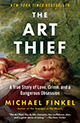
Imagine stealing hundreds of priceless works of art across Europe in broad daylight. Not for money, but because you really, really like art. The Art Thief is audacious, strange, and completely addictive. As a sucker for any good heist story, I was hooked. The most unbelievable part? Almost none of it feels believable. And yet, it all happened. Art is a helluva drug.

I am aggressively not a medical-drama person. The Pitt changed that. No dreamy surgeons, no supply-closet romances. Just smart people making impossible decisions while an emergency room casually descends into hell. Apparently, when the medicine is the drama, I’m in. Season three cannot arrive soon enough.

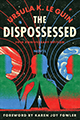
I don’t consider myself a science fiction reader. I have unfortunately fallen into the mental shortcut of genre convention and assumed I wouldn't be interested in fictional physics, planetary conflicts, and light-speed travel.
That was until I read The Dispossessed by Ursula K Le Guin. The tale of a lone physicist, leaving his home to visit the neighboring moon to continue his work. A great motif runs throughout the novel: the inevitability of return. Not just return to a physical home, but to revisit memory, to recognize the cyclical nature of life.
The older I get, the more I recognize return as being a part of the journey. I have returned to my craft many times to reinvent what I know about design. I have strayed into different disciplines, only to come back when I am ready. As Le Guin wrote, "The thing about working with time, instead of against it, he thought, is that it is not wasted. Even pain counts".


My current reading material? A Chilton Repair Manual for a 1988 Ford F-250.
On the screen, it’s Marvel all the way. I caught Spider-Man: Brand New Day, and what keeps pulling me back to the MCU is the ridiculous amount of continuity…the little connections, callbacks, and threads running through movie after movie. I’m a comic book nerd, so this is very much my thing.
And yes, I’ll absolutely be seeing Avengers: Endgame again in theaters this September for the seven extra minutes of footage. I also have an advent calendar counting down to Avengers: Doomsday. You could say I’m a fan.


Recently picked up watching The Terror on AMC+. Based on the book of the same name by Dan Simmons, it's a slow-burn period drama with some vaguely supernatural or creature-feature aspects to it that elevate what is already stellar dramatic, character-driven dynamics about the lives of the sailors of an Arctic expedition as they battle the elements, dwindling supplies, and their own psychological torment in an alien landscape of absolutely brutal conditions.

I also recently read Middlemarch for the first time. Set in the 19th century, this dense and layered English novel by George Eliot (Mary Ann Evans) deals with class, ambition, politics, and social dynamics. It richly captures the social and political upheaval of this period, including the rise of the middle class, the agitation for political reform to expand voting rights, and the transition from agrarian to industrial society. What struck me while reading it was how contemporary it felt in so many ways. The hostility toward new technology, the anxieties of romance where expectations meet reality, and the universal timelessness of karmic repercussions in which one cannot outrun their past sins, were all so richly drawn. It's hard not to be engrossed in even the most minute details of late Victorian life due to the novel's incredibly rich descriptive prose and dialogue.

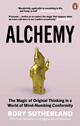
Legendary ad man Rory Sutherland is at it again. If you've seen his interview clips on social media, you're familiar with the comedian-meets-ad-wizard's style of humorous marketing insights. Alchemy: The Surprising Power of Ideas That Don't Make Sense is a fun, provocative read for anyone tired of the idea that people are (or should be) perfectly rational.
Drawing on decades in advertising, Sutherland makes the case that the best solutions to business and life problems are often the ones logic would throw out. The book is really a barrage of witty stories: why Red Bull took off despite tasting awful, how a placebo can beat a "reasonable" fix, why perceived value can matter as much as the real thing, etc. Some readers will want more structure, sure. But the charm and the steady stream of counterintuitive insights make it hard to forget.
